Showing posts with label Paul Desmond. Show all posts

Free Jazz: A Second Breath


Ever since Ornette Coleman's double quartet, many experiment attempted to organize the newfound freedom of jazz or cause the power of collective improvisation -at the core of large groups- to explode.
While Alan Silva worked on density of resonant layers by superimposing individual sounds, Sun Ra linked up with tradition of exoticism and fantastic, associated with the big bands of the thirties.

Jazz Of Thufeil - Sun Ra.jpg
Sun Ra

Moreover, numerous musicians came together in associations to produce and distribute their own music, which was said to be hard to sell. One of these, the Chicago-based Association for the Advancement of Creative Musicians (AACM), contributed to restarting the dynamism of free jazz just when the movement had begun to falter. Created in 1965 in Chicago by pianist Muhal Richard Abrams, the AACM pulled together a variety of figures who would be prominent in free jazz in seventies.
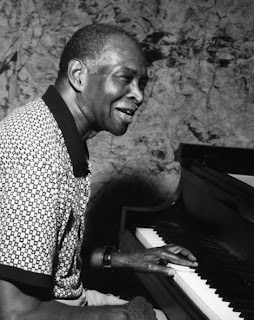
Jazz Of Thufeil - Muhal.jpg
Muhal Richard Abrams
Jazz Of Thufeil - Powell, Davis, Konitz, Blakey.jpg
Lee Konitz (front), with Bud Powell, Miles Davis and Art Blakey
(photo: M.Fleiss)

Jazz Of Thufeil - Paul Desmond.jpg
Paul Desmond

While the Art Ensemble of Chicago played on light and shade and on dramatic organization of time, Anthony Braxton, an AACM member, referred directly to Eric Dolphy but also to such white musicians as Lee Konitz and Paul Desmond and to 20th- century classical composers as well. Particularly popular in Europe during the sixties, Braxton revealed the talents of many musicians, such as the trombone virtuoso George Lewis and the pianist Anthony Davis.

Jazz Of Thufeil - Anthony Braxton.jpg
Anthony Braxton


____________________

The West Coast And World Weariness (1)


As much as New York bebop seemed to be the expression of a community struggling for survival and recognition, so West Coast jazz musicians seemed to give themselves fully to introspection and existential suffering, combined with an indifference to everything around them. Admirers and critics alike found it difficult to place these young, white, middle class people on the same level as their urban black idols.

Jazz Of Thufeil - Art Pepper.jpg
Art Pepper


In the fifties, as McCarthy's campaign against Communism progressed, and the United States plunged into the cold war, cultural life was at a peak. The anti establishment writers of the Beat Generation often referred to jazz in their work and participated with the California musicians in experiment combining music and literature. Preceding rock and roll, West Coast was the expression of a youth in rebellion against the middle class from which it came.

Jazz Of Thufeil - Chet Baker.jpg
Chet Baker


Far from being easygoing, the music of alto saxophonist Paul Desmond, for example, transmitted a quiet and embittered desperation, while Art Pepper, more unstable and intense, displayed an insatiable sensuality on the same instrument. As for Chet Baker, he was the great romantic figure of the West Coast. He played trumpet in a piano-less quarter led by Gerry Mulligan, who exemplified the spirit of the California fifties. This quartet was concerned with structure and melodic clarity, and it solos for two voices in counterpoint, sweet atmosphere, and feeling of chamber music foreshadowed many of the avenues explored in later jazz. Finally, the absence of the piano and the statement of the harmonies by the double bass alone offered wider freedom for the soloist.


____________________