Showing posts with label Wynton Marsalis. Show all posts

From The Church To The Street


African-American jazz has always sought to maintain its footing in the sociological reality from which it was born.

Jazz Of Thufeil - Quincy Jones.jpg
Quincy Jones

Jazz Of Thufeil - Ray Charles Quincy Jones.jpg
Ray Charles and Quincy Jones

Such was the significance of Quincy Jones' Back on the Block, which came out in 1990. Taking stock of this century as it nears its end, Jones - Count Basie's former arranger and Michael Jackson's producer at that time - assembled a few of the great names of Black American music, from Ray Charles to Miles Davis, along with Ella Fitzgerald and Dizzy Gillespie.

Jazz Of Thufeil - Ella Fitzgerald.jpg
Ella Fitzgerald

Jazz Of Thufeil - Geri Allen.jpg
Geri Allen
Soul music and rap welcomed jazz, as if to remind it they grew up together in black churches and on the street. From the delicate neo-classical touch of the pianist Geri Allen to the fanfares of Lester Bowie (the Art Ensemble of Chicago's trumpet player), along with the saxophonists Kenny Garrett (like Geri Allen, trained in Detroit with the trumpet players Marcus Belgrave) or Gary Thomas (discovered while with Jack DeJohnette and Miles Davis) - the same concern with roots, the same attention to the latest developments of funk, and openness of spirit that reflected the lifestyle and choices of the sixties loft generation.

Jazz Of Thufeil - Lester Bowie.jpg
Lester Bowie
 
Jazz Of Thufeil - Marcus Belgrave.jpg
Marcus Belgrave

What do the following have it common: Wynton Marsalis in his three-pieces suit, the rap group 2 Live Crew with its obscenities, and the jazz that came forth in the sixties, mixing the acquisitions of free jazz with the certainties of bop?

Jazz Of Thufeil - Kenny Garrett.jpg
Kenny Garrett

Jazz Of Thufeil - 2 Live Crew.jpg
2 Live Crew
All belong to that same community - they were different reactions to the mounting economic difficulties, the marginalization of the most disenfranchised and the increase in the minority population in the eighties.

____________________

The Coming Of Neo-Bop


Historic Reissues Take Over The Recording Market

Now a well-recognized and thoroughly accepted form of music, jazz occupies a solid on music lovers' shelves, side by side with the classics.

 After 1983 - which was, significantly, the year the compact disc was introduced - record companies suddenly had the opportunity to reissue and anthologize the recorded heritage of jazz at a lower cost than ever before. Even with so much focus on looking back, however, in the eighties there were still some new developments, largely restricted to neo-bop and commercial productions.

The Coming Of Neo-Bop
 
With the brothers Branford and Wynton Marsalis as its stars, neo-bop was the field developed by an elite group of young musicians trained in the school of Art Blakey's Jazz Messengers. Heirs to hard bop, on which they put a new turn after listening to the music of the Miles Davis quintet of the sixties, these young musicians were regularly accused of being nothing but copies of earlier models.
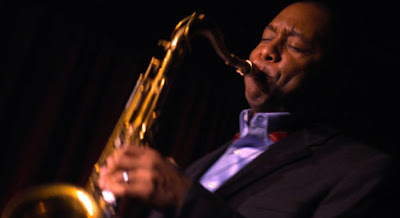
Jazz Of Thufeil - Branford Marsalis.jpg
Branford Marsalis
Their astoundingly advanced technique and flawless performances deprived them, said some critics, of that element of risk that made their predecessors interesting.

These not-very-subtle observations ignored the importance of the traditional element in black American music. On top of that, one must remember that despite its lightning-fast evolution in just a few decades, jazz has always counted more followers than innovators.

Jazz Of Thufeil - Wynton Marsalis.jpg
Wynton Marsalis
 The adoration for the 'small masters' who personalized Charlie Parker's message during the fifties is not so far removed from the admiration that the New York neo-boppers aroused thirty year later.

____________________